



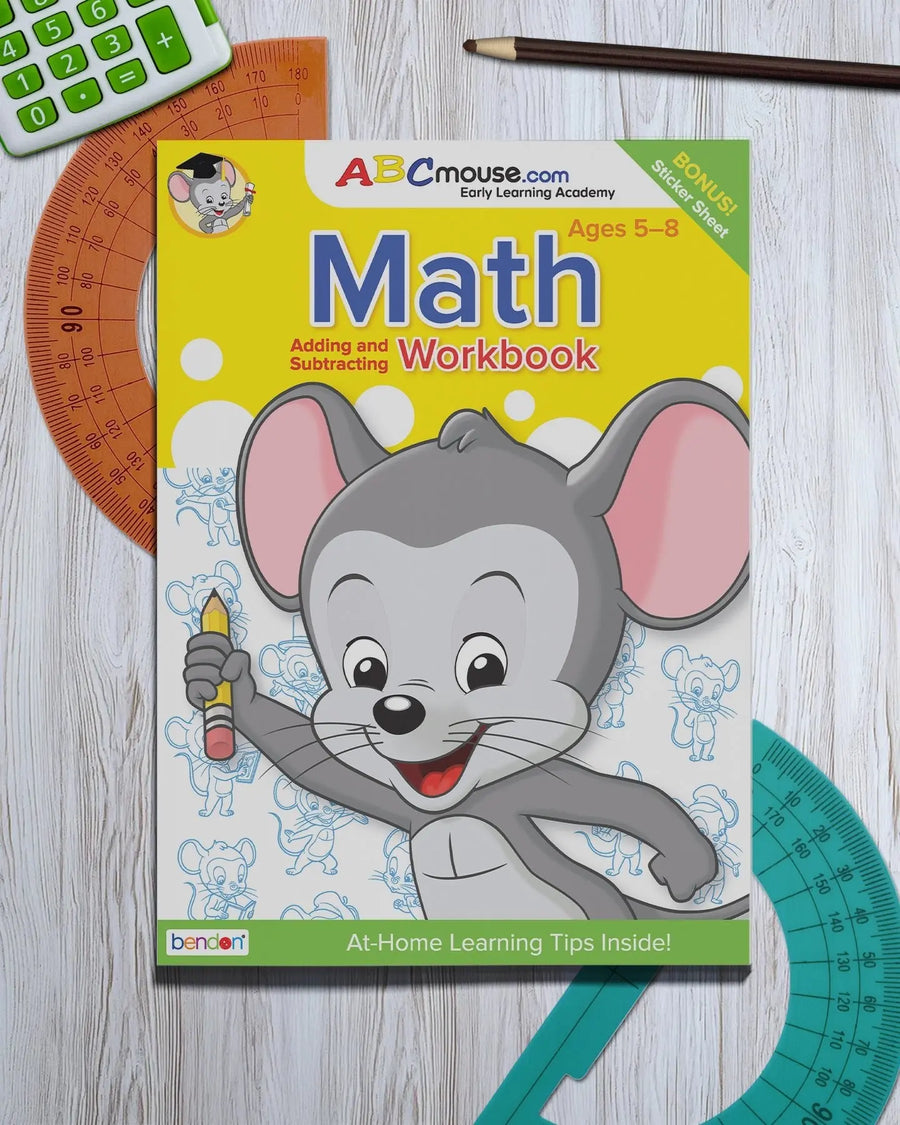
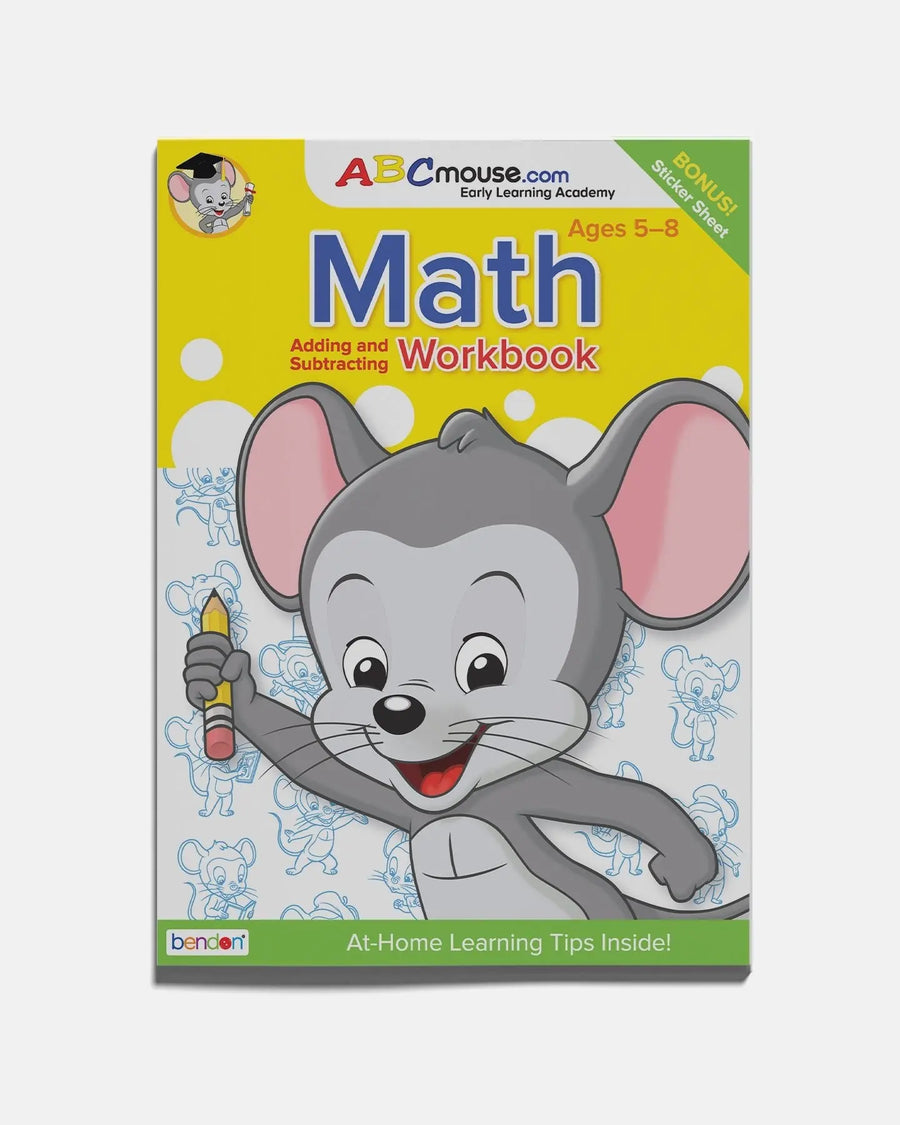
Math: Adding and Subtracting Workbook
Math workbook, ages 5 to 8
$7.99$10.99Sale
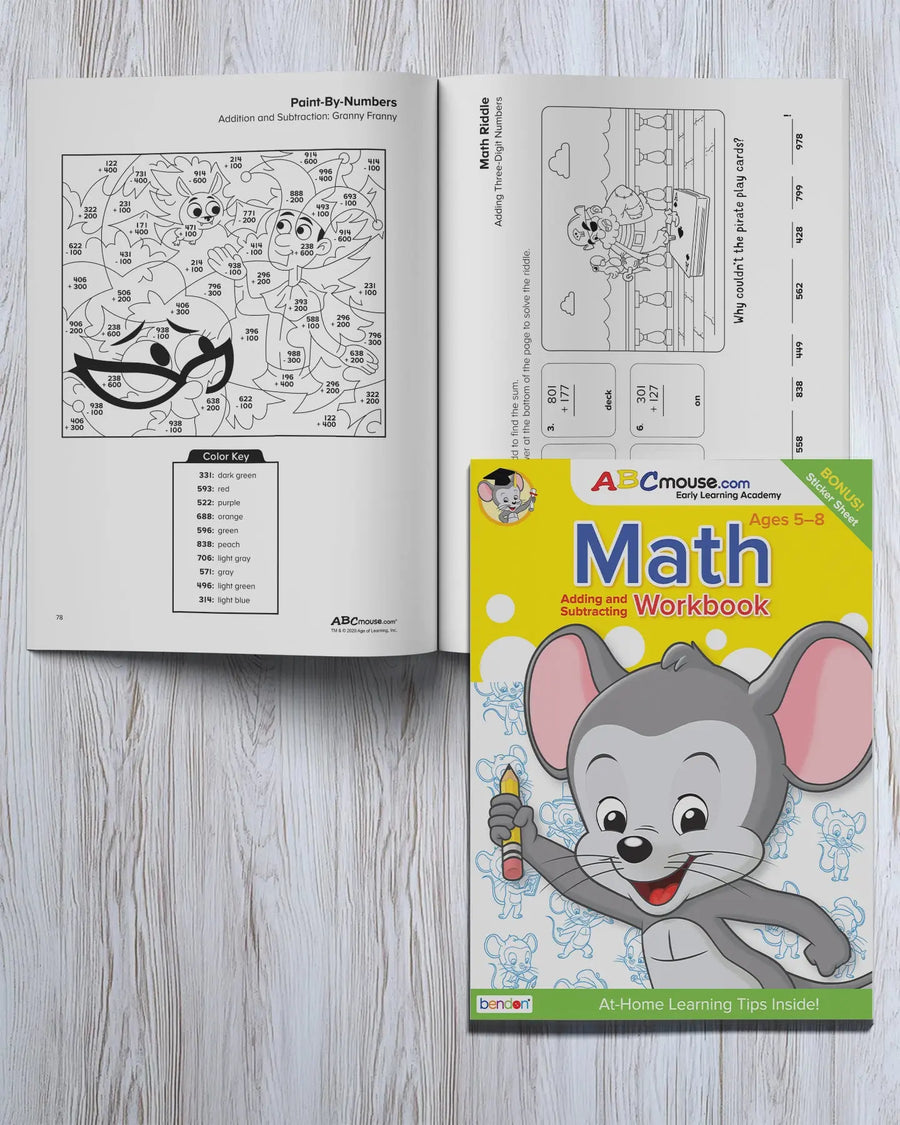
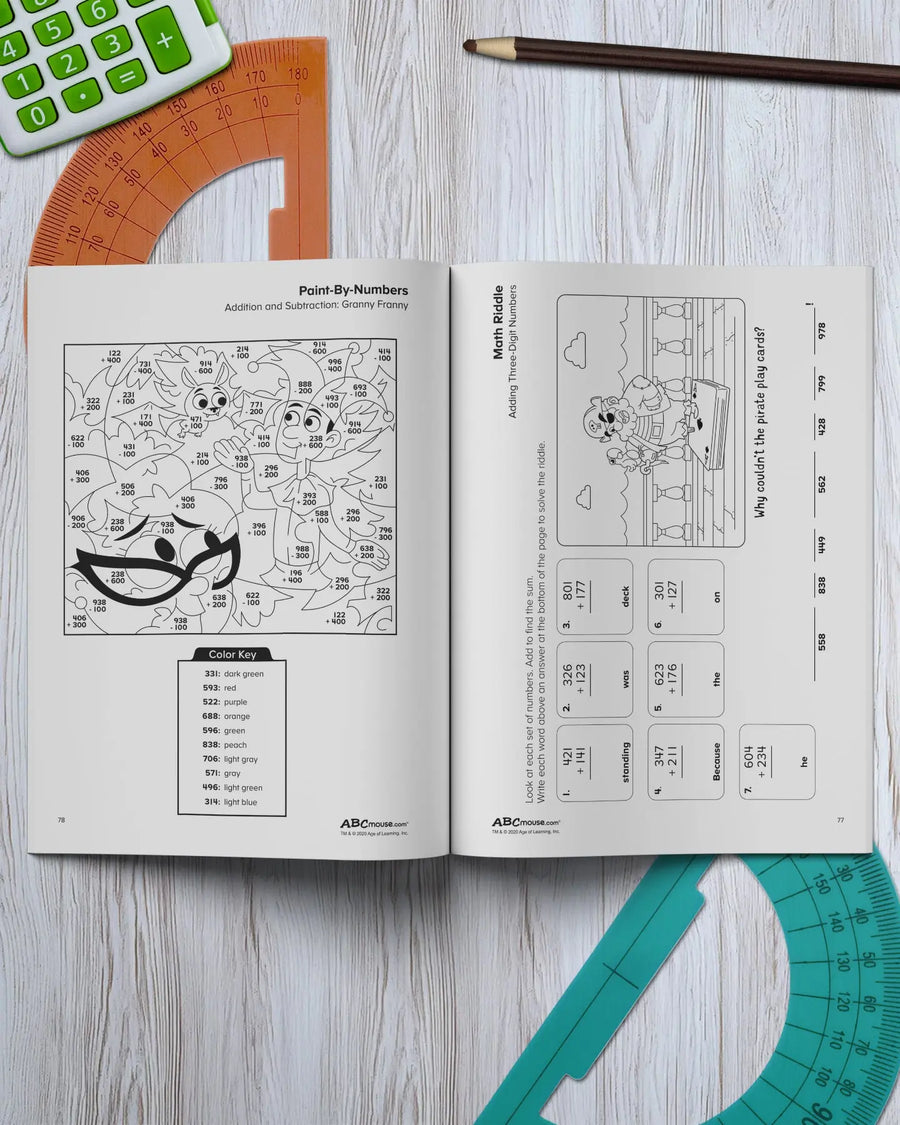
An addition and subtraction workbook for ages 5 to 8, progressing from basic number bonds to multi-digit calculations through colorful, guided activities.
Build Core Skills
- ✓Number Sense
- ✓Counting & Place Value
- ✓Problem-Solving
- ✓Classroom Models
- ✓Daily Practice
- ✓Educator-Designed
Build essential math foundations with the ABCmouse Math Adding and Subtracting Workbook designed for elementary learners ages 5-8. This comprehensive workbook introduces and strengthens fundamental arithmetic operations through engaging, colorful activities that progress from basic number bonds to multi-digit calculations. With friendly ABCmouse characters guiding each lesson, children develop computational fluency and problem-solving skills while building the mathematical confidence that leads to academic success. Add this curriculum-aligned workbook to your cart today and help your child master the addition and subtraction skills essential for future math achievement!
Best for ages 5 to 8, kindergarten through early elementary. Introduces and strengthens addition and subtraction, building computational fluency and the confidence for future math.
Frequently asked questions
Ages 5 to 8, kindergarten through early elementary.
Addition and subtraction, progressing from basic number bonds to multi-digit calculations.
It builds computational fluency and problem-solving through colorful, step-by-step activities.
No. This is a screen-free activity workbook you can use entirely on its own.
It was developed by the education experts at ABCmouse.